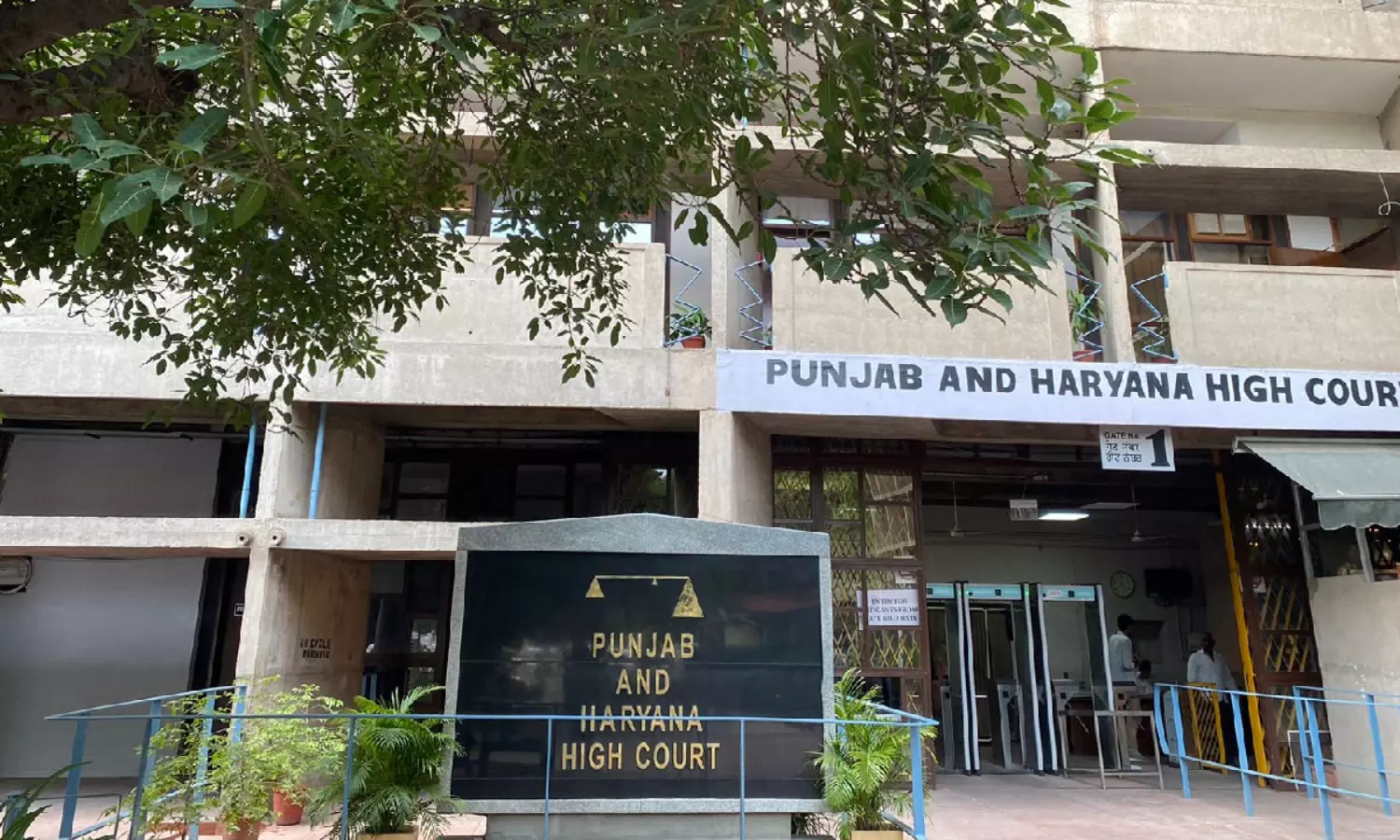
In a significant judgment delivered in 2026, the Punjab & Haryana HC provided much-needed clarity on the issue. Can journalists publish a news report based on a judge’s oral order before the final judgments is physically signed? This question has long troubled legal reporters and media houses covering court proceedings. The fear of contempt proceedings often forced journalists to exercise caution when reporting courtroom developments in real time.
In a significant judgment delivered in 2026, the Punjab and Haryana HC provided much-needed clarity on the issue. The Court held that journalists and media organizations cannot be subjected to criminal contempt proceedings merely for publishing a fair and accurate report of an order dictated in open court, even if the written order has not yet been formally signed.
The ruling is being viewed as an important affirmation of press freedom and transparency in judicial proceedings.
Background: How The Punjab & Haryana HC Controversy Began
The matter arose from a transfer order dictated by a Single Judge of the High Court on April 9, 2026. The order concerned the transfer of two high-profile criminal trials from the Sessions Court in Faridkot to a competent court in Chandigarh.
The proceedings attracted considerable public interest. The following day, several leading newspapers, including The Tribune, The Hindustan Times, and The Times of India, carried reports detailing the court’s decision.
However, the written order had not yet been physically signed by the judge. This prompted the High Court to take suo motu cognizance of the publications, raising concerns that reporting an unsigned judicial order could amount to criminal contempt by interfering with the administration of justice.
The matter was subsequently placed before a Division Bench for consideration.
The Case: Court on Its Own Motion v. Jyoti Malhotra and Others
When the case came up before the Punjab & Haryana HC, the Division Bench comprising Justice Jasgurpreet Singh Puri and Justice Amarjot Bhatti examined whether journalists could be held liable for contempt merely because they reported an order that had been dictated in open court but not formally signed.
At the heart of the dispute was the distinction between the judicial act of pronouncing an order and the subsequent administrative process of signing and authenticating it.
The Court ultimately concluded that the publications in question were based on what had actually transpired in open court and accurately reflected the contents of the dictated order. Consequently, no case of criminal contempt was made out against the journalists or newspaper editors.
The Punjab & Haryana HC anchored its landmark decision in Section 4: The Court’s Reasoning
The High Court anchored its decision in Section 4 of the Contempt of Courts Act, 1971, which protects the publication of fair and accurate reports of judicial proceedings.
The provision states:
“Subject to the provisions contained in Section 7, a person shall not be guilty of contempt of court for publishing a fair and accurate report of a judicial proceeding or any stage thereof.”
Relying on this statutory safeguard, the Court observed that the reports published by the newspapers were neither misleading nor inaccurate. Since the journalists merely reported what had been dictated in open court, their actions fell squarely within the protection offered by Section 4.
The Bench emphasized that criminal contempt cannot be invoked against members of the press who faithfully communicate judicial proceedings to the public without distortion or malice.
Reliance on Supreme Court Precedents
To support its conclusions, the High Court referred to a series of landmark decisions of the Supreme Court of India that have consistently recognized the legal significance of oral pronouncements made in open court.
Surendra Singh v. State of U.P. (1954)
This landmark judgment established that the essence of a judicial decision lies in its public pronouncement. The Supreme Court held that a judgment becomes effective when it is delivered in open court and communicated to the parties. The subsequent process of signing and sealing serves as a method of authentication rather than the source of the judgment’s legal existence.
Vinod Kumar Singh v. Banaras Hindu University (1988)
The Supreme Court reiterated that once a court delivers its decision orally, the order becomes operative. Physical signatures and administrative formalities may follow later, but they do not determine when the judicial decision comes into existence.
Kushalbhai Ratanbhai Rohit v. State of Gujarat (2014)
The Court further clarified that an order formally intimated to parties in open court represents the definitive expression of the court’s decision. Such pronouncements cannot be treated as legally insignificant merely because certain formal steps remain pending.
Drawing from these precedents, the High Court observed that journalists reporting an oral pronouncement are effectively reporting an authentic judicial act rather than speculation or unofficial information.
Significance for Legal Journalism and Digital Media
The ruling carries considerable significance for legal correspondents and digital news platforms that rely on timely courtroom reporting.
In today’s fast-moving media environment, news organizations often publish updates within minutes of a court’s pronouncement. The judgment confirms that reporters need not wait for the completion of administrative formalities before informing the public of a judicial decision.
At the same time, the protection is not unlimited. The Court stressed that the safeguard applies only to reports that are fair, accurate, and based on what actually transpired in court. Any distortion, embellishment, or misleading presentation of proceedings may still invite legal consequences.
The judgment therefore strikes a balance between judicial dignity and the constitutional commitment to freedom of the press.
Key Judgments at a Glance
| Landmark Case | Principle Established |
|---|---|
| Surendra Singh v. State of U.P. (1954) | Oral pronouncement in open court constitutes the operative judgment. |
| Vinod Kumar Singh v. Banaras Hindu University (1988) | A judgment becomes effective upon delivery and does not depend on physical signing. |
| Kushalbhai Ratanbhai Rohit v. State of Gujarat (2014) | Orders communicated in open court represent the court’s definitive decision. |
| Court on Its Own Motion v. Jyoti Malhotra & Others (2026) | Fair reporting of an unsigned but dictated order does not amount to criminal contempt. |
Key Takeaways
By dismissing the contempt proceedings against the journalists and editors, the Punjab & Haryana HC has delivered ruling reinforces the principle that a judicial decision becomes legally meaningful when it is pronounced in open court. The subsequent act of signing the order is largely procedural and intended to ensure authenticity and certainty.
The judgment also strengthens media freedom by clarifying that journalists who accurately report courtroom proceedings enjoy statutory protection under Section 4 of the Contempt of Courts Act. As long as reporting remains fair and truthful, criminal contempt cannot be used as a tool to penalize legitimate journalism.
Conclusion
By dismissing the contempt proceedings against the journalists and editors, the Punjab and Haryana HC has delivered a significant victory for press freedom and open justice. The decision recognizes the public’s right to receive timely information about judicial proceedings while preserving the integrity of the legal system.
At a time when real-time court reporting has become an essential component of legal journalism, the ruling provides much-needed certainty. It confirms that accurate reporting of orders dictated in open court is not only permissible but also protected by law, even before the judgment is formally signed.
Frequently Asked Questions (FAQs)
Is it legal to report a judgment before it is signed?
Yes. The Punjab and Haryana HC has clarified that a fair and accurate report of an order dictated in open court is protected under Section 4 of the Contempt of Courts Act, even if the order has not yet been signed.
Can a judge modify an order before signing it?
A court may, in certain circumstances, revisit or modify an unsigned order. However, accurately reporting the original oral pronouncement does not amount to contempt.
What qualifies as a fair and accurate report?
A report must faithfully reflect what occurred during judicial proceedings without distortion, exaggeration, or misleading interpretation.
Why is the Surendra Singh judgment important?
The 1954 decision established the principle that the legal essence of a judgment lies in its public pronouncement rather than subsequent administrative formalities.
Does press freedom allow publication of all courtroom proceedings?
No. Restrictions continue to apply to in-camera proceedings, matters covered by statutory publication bans, and other legally protected information.
Author

Leave a Reply