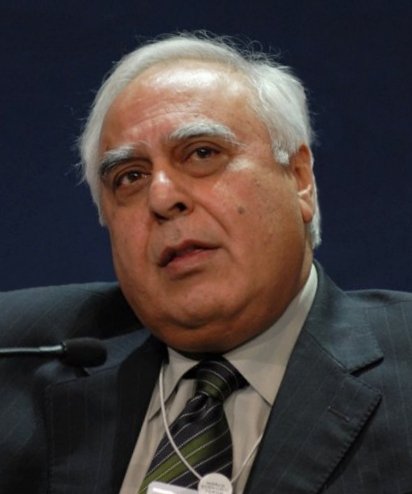
The Kapil Sibal legal aid fund for students facing FIRs after the Jantar Mantar protests has crossed its first major milestone. The senior advocate and independent Rajya Sabha MP announced on Monday that he has personally contributed ₹1 crore to a legal aid corpus set up by the Cockroach Janta Party (CJP) to support students and protestors who continue to face police cases despite the Centre’s assurances that no punitive action would follow the recently concluded agitation.
What Kapil Sibal Announced
Addressing reporters alongside CJP spokesperson Saurav Das, Sibal confirmed that his ₹1 crore contribution would seed a fund dedicated to legal aid for students and youth booked by police across states in cases connected to the protest movement. He clarified that while he was funding the initiative, he would not personally be involved in administering it, leaving the CJP’s legal team to manage disbursement and case coordination.
As part of the plan, the CJP intends to build a website that will document the details of students and protestors adversely affected by FIRs, allowing volunteer lawyers, whether pro bono or otherwise, to sign up and offer representation. Sibal has also proposed a broader tracking mechanism to monitor legal cases filed against protestors in states such as Bihar, Assam, West Bengal and Maharashtra, wherever peaceful demonstrations took place during the movement.
Background: The Jantar Mantar Protest And The Talks That Followed
The fund traces its origins to the student-led agitation against the alleged NEET paper leak, which culminated in a march to Parliament near Jantar Mantar. The demonstrations turned tense when police action against protestors drew criticism from opposition parties and civil society groups alike. The Cockroach Janta Party, a youth-driven movement that emerged in response to remarks made by the Chief Justice of India comparing unemployed youth to “cockroaches,” played a central role in organising and later negotiating an end to the protest.
The nationwide agitation was called off on July 25, shortly after Dharmendra Pradhan stepped down as Union Education Minister. During subsequent rounds of talks with government representatives, the CJP pressed for two core commitments: the withdrawal of all FIRs registered against students and organisers, and a guarantee that no fresh punitive action would follow. According to the organisation, the government agreed in principle to both demands during the negotiations.
CJP’s Concern Over Cases Still Being Filed
Despite that understanding, the CJP has continued to flag instances of students being detained or booked in several states. At the press conference where Sibal’s contribution was announced, spokesperson Saurav Das said there was credible apprehension that criminal cases could still be lodged against students across the country, notwithstanding the assurances extended by the Union Government. The organisation said it had been in regular touch with Sibal through the course of the protest specifically to arrange legal backup for exactly this scenario.
The concern is not merely theoretical. The CJP has separately pointed to reports of students being targeted or detained in BJP and NDA-ruled states even after the protest was called off in good faith, and has said it will pursue further steps if FIRs are not withdrawn as promised. It is exactly this gap, between a political assurance and what plays out on the ground, that the Kapil Sibal legal aid fund is designed to bridge.
Kapil Sibal Legal Aid Fund: How It Is Meant To Work
Explaining his decision to step in, Sibal framed the fund as a response mechanism built for exactly this kind of gap between political assurance and on-ground enforcement. He said: “there shouldn’t be any FIRs, and if there have been, they should be withdrawn.”
- ₹1 crore contributed personally by Kapil Sibal to seed the fund
- A dedicated website to be created listing students affected by FIRs
- Volunteer lawyers, pro bono or paid, invited to register and take up cases
- Coverage extended to protest-related cases beyond Delhi, including Bihar, Assam, Bengal and Maharashtra
- Sibal to fund the initiative but not personally manage its administration
Sibal also used the announcement to appeal directly to the wider legal community, urging advocates across India to contribute to the fund so that a larger pool of resources is available to defend affected students. He described the effort as lawyers standing up for people who have borne the brunt of what he characterised as the misuse of law during the protest crackdown.
Reactions From The Legal Fraternity
Sibal’s move has been read within legal circles as one of the more concrete gestures of institutional support the protest movement has received since it wound down. Bar associations in several states have previously expressed solidarity with the students informally, but the Kapil Sibal legal aid fund is the first structured attempt to convert that sentiment into an operational support system, complete with a public list of affected students and a standing roster of volunteer counsel.
Legal aid initiatives of this kind typically depend on two things: a steady flow of case information from the ground, and lawyers willing to take on matters that may not be commercially attractive. By publicly appealing to the wider bar to contribute funds rather than only their time, Sibal appears to be trying to solve for both, seeding the corpus first and letting the network of volunteer lawyers scale around it.
The Bigger Picture
Sibal’s intervention comes at a time when the fallout from the protests continues to play out in Parliament and in the courts. The Monsoon Session has seen repeated adjournments over opposition demands for accountability on the police response, while petitions seeking an independent probe into the events near Jantar Mantar remain before the Supreme Court. For a closer look at how the judiciary has responded to related petitions, read our earlier coverage of the Supreme Court’s handling of the student protest matter.
What Happens Next
Whether the Kapil Sibal legal aid fund translates into meaningful relief will depend largely on how quickly the promised website and lawyer network are operationalised, and on whether state governments actually follow through on withdrawing the FIRs the Centre is said to have agreed to drop. The CJP has indicated it will keep publishing updates on detentions and FIRs it believes breach the understanding reached with the Centre, which should give early signals on how well the fund is able to keep pace with the cases coming in.
For now, Sibal’s contribution marks one of the more concrete steps taken by a member of the legal fraternity to back the protestors once the cameras and crowds at Jantar Mantar have moved on. If the response from other advocates matches his appeal, the fund could grow well beyond its opening ₹1 crore, giving the CJP’s legal team meaningfully more room to take on cases as they are reported from across the country.
Leave a Reply